
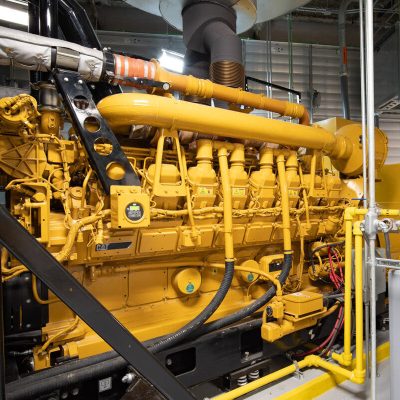
The main components of a diesel generator include diesel engine, Alternator, Fuel systems (tank), Voltage Regulator, Cooling System and Exhaust Systems, Lubrication System, Battery Charger, Control Panel, Main Assembly/ Frame (Chassis), which we will describe below.
Engine
The engine is the source of mechanical energy input to the diesel generator.
The size of the power of the diesel engine can be directly proportional to the maximum output power of the generator (diesel generator).
2 basic points in choosing a diesel engine for use in a diesel generator:
The type of fuel used by the diesel generator
The type of diesel generator engine valves
Alternator
Single generator or dynamo (also known as genhead) is a part of a diesel generator that produces electrical output from the mechanical input provided by the diesel generator engine.
The generator consists of a set of fixed and moving parts that are placed in the casing. These parts are automatically connected to each other, resulting in relative motion between the magnetic and electric fields, which in turn generates electricity.
The components of the generator are:
Stator: This is the stationary part of the generator in a diesel generator. It consists of a set of electrical conductors in coils on an iron core.
Rotor: This is the moving component that produces a rotating magnetic field that is one of the following three types:
by induction: This method is known as brushless alternators and is usually used in large generators
by permanent magnets: this is a common component in small generator units.
Using a driver: a small driver from a direct current source. (DC)
The rotor produces a moving magnetic field on the stator, which causes a voltage difference between the stator windings. This action leads to the generation of Alternating Current (AC) at the output of the diesel generator.
Items mentioned below are the factors that you should remember when choosing a generator for a diesel generator:
Metal Housing vs. Plastic Housing: The all-metal design ensures the generator’s durability. The plastic body of the generator is exposed to the moving parts of the dynamo, which increases wear and tear over time. This is a dangerous matter.
Brushless Design: A brushless alternator requires less maintenance and also produces better power.
Fuel system of the diesel generator
The fuel tank usually has enough capacity to keep the diesel generator running for 6 to 8 hours on average. In the case of a small diesel generator, the fuel tank is a part of the chassis base of the diesel generator or is mounted on top of the frame of the diesel generator. To use a diesel generator in a commercial context, it may be necessary to build and install an external fuel tank next to the diesel generator.
The common features of the diesel generator fuel system:
Connecting the pipe from the fuel tank to the diesel generator engine: The supply line leads the fuel from the tank to the engine and the return line leads the fuel from the engine to the tank.
Ventilation pipe for fuel tank: The fuel tank has a vent pipe to prevent pressure or vacuum when refilling and draining from the tanker.
Overflow connection from the fuel tank to the drain pipe
Fuel pump: It is used to transfer fuel from the main tank to the current tank. The fuel pump is normally electrically operated.
Fuel separator/ Gasoline filter: This liquid fuel filter is to protect other diesel generator components from corrosion and pollution.
Fuel Injector: This part regulates the amount of liquid fuel and the amount of spray required for the combustion chamber of the engine.
Warning: When filling the fuel tank, make sure there is contact between the nozzle and the fuel tank to prevent sparking.
Voltage regulator
This section is for adjusting the output voltage of the diesel generator. The following mechanism for each of the components has an effective role in the voltage regulation process.
Voltage regulator: Convert AC voltage to DC current. Voltage regulator to convert a small part of the output of the AC voltage generator into DC current.
Exciter Windings: convert DC current to AC current. The current excitation winding has a function similar to the primary and small stator windings in producing AC current. The excitation coil is connected to the rotary rectifier in known units
Circular rectifiers: Convert AC current to DC current. It rectifies the AC current generated by the excitation coils and converts it to DC current. This DC current feeds the rotor/ armature, which creates a rotating electromagnetic field on the rotor/ armature.
Rotor/ Armature: Convert DC current to AC voltage. Today, the rotor/ armature increases the AC voltage across the generator stator windings, which now acts as an AC output voltage booster.
Cooling and Exhaust Systems
span Cooling System: Continuous use of diesel generator causes its various components to heat up. It is necessary that the cooling and ventilation system directs the heat produced by the diesel generator outside.
Water is sometimes used as a coolant for diesel generators, but this is mainly limited to special conditions such as small diesel generators in low capacity applications or very large units over 2250 kW and above. Hydrogen is sometimes used as a stator winding coolant for larger diesel generators. Hydrogen absorbs heat better than other refrigerants.
It is necessary to check the coolant level for the diesel generator on a daily basis. The cooling system and water pump should be cleaned after every 600 hours and the air filter should be cleaned after every 2400 working hours of the diesel generator. The diesel generator must be kept in an open and ventilated space. The standard space is at least 3 feet on all sides of the diesel generator, allowing for free air flow.
span Exhaust System: While reducing the noise resulting from combustion, it quickly directs the exhaust gases from the cylinders outside the installation environment. The design of the pipe path is very important; Because any resistance in the path of the exit of these gases causes negative pressure and this in turn causes a decrease in the output power of the engine and an increase in heat. The exhaust gases are collected by the exhaust manifold from each cylinder and finally directed to a single pipe.
Manifolds are designed in such a way that the direction of smoke in them is done with minimal disturbance and no negative pressure. In all types of diesels, dry manifolds are mainly used, but in some special applications, double-walled pipes that are cooled by a layer of water or triple-walled pipes that are cooled by a layer of water and a layer of air are used. These additional equipments have no effect on heat transfer and are only used to physically protect the operator from touching hot parts.
The position of the room and the arrangement of the equipment inside the installation room determine the exhaust path of the device:
The pressure drop created along the route should not be more than 7 kPa, which depends on factors such as the length of the pipe, the number of elbows used, the angle of the elbows, the building of the exhaust source, the flexible pipe and the sealing door at the end of the exhaust.
The equipment used in the exhaust path must be installed in such a way that no pressure from them enters the device.
The minimum distance of the exhaust system from flammable materials is 25 cm.
The cutting angle of the end of the pipe should be 30 to 40 degrees, which prevents the disturbance of smoke and reduces the sound.
At several points on the lowest level, an outlet with a cap should be placed to drain the water.
Using a common exhaust pipe with other devices such as boilers and other diesel generators causes the smoke to return to the extinguishing device, so each diesel generator must have its own exhaust pipe.
Lubrication Systems
A diesel generator has many moving parts. In order to increase the lifespan of the parts and ensure the correct operation of the diesel generator, the lubrication system must be taken care of. This work includes checking the oil level in the oil analyzer tank every 8 hours of diesel generator operation, checking any leakage from lubricants and changing the oil every 500 hours of diesel generator operation.
Battery charger
Battery charging by diesel generator should be done with high precision and according to its voltage. If the voltage needle is very low, the batteries are under charging. If the voltage needle floats too much, it will shorten the battery life. Battery chargers are usually made of stainless steel to prevent corrosion. The output DC voltage of the battery charger is at 2.33 V per cell, which is an accurate voltmeter for lead-acid batteries.
Control Panel
Visually, the control panel is a set of displays that show the measurement of various parameters such as voltage, current and frequency through gauges and meters. These meters and gauges are set in a metal body, usually anti-corrosion, to protect against the effect of rain or snow. The panel may be mounted on the body of the generator itself, which is common on small generators. If they are mounted on the generator, they usually have anti-vibration pads that help isolate the control panel from shock. Control panels for a larger industrial generator can be completely separate from the generator and are usually large enough to stand alone. These units may also be rack-mounted or wall-mounted next to the generator, which is common inside an enclosure or in indoor applications such as a data center.
Control panels usually have buttons or switches that help operate the generator, such as an off button or an on button. Switches and gauges are usually grouped by function. This makes the panel convenient and safe to use as it minimizes the possibility of the operator accidentally selecting or operating the wrong control. Imagine trying to turn off a vibrating generator with a spring-loaded lever in the middle of the night, and you’ll see why a simple cut-out switch on the control panel makes sense.
chassis
The diesel generator is portable or fixed, in general, all the above equipment is placed on the platform or the same chassis in a power generator device.
The special importance of a good chassis
We know that all the equipment used in an electric generator is placed on a chassis or metal structure. This important part of the generator is where the engine, alternator, control panel and fuel tank are located. The durability of the chassis is very important in using and moving the device, and basically, the thickness of the chassis metal and its compatibility with the weight of the diesel generator are among the most important points that buyers should consider when buying a diesel generator.
Note that the low price of some assemblies made to assemble the generator components will lead to many functional consequences in the expected operation of the device.


